


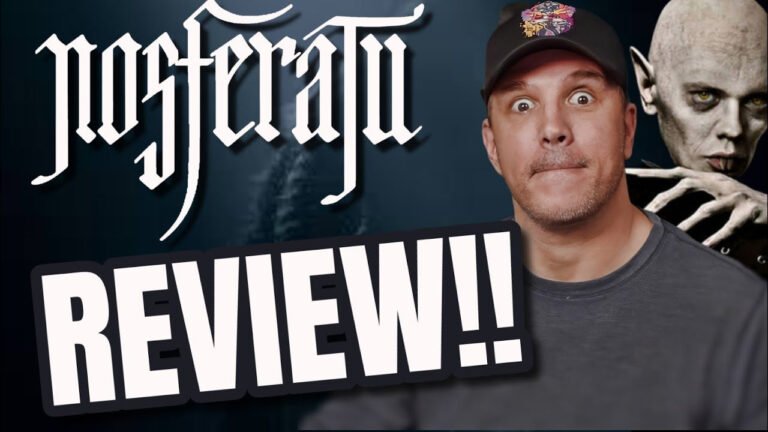
Robert Eggers’ Nosferatu (2024) has stirred a wave of discussion among critics and horror fans alike. As a reimagining of the 1922 silent classic, the film arrives with big expectations—both as an homage to the earliest days of cinematic horror and as a modern interpretation shaped by Eggers’ signature style. Reviews so far highlight its hypnotic visuals, emotionally heavy atmosphere, and bold performances, while also noting that its pacing and artistic intensity may divide audiences.
Here’s a breakdown of what reviews are saying and how the film stands in today’s horror landscape.
A Gothic Revival Done Right
Critics consistently praise Eggers’ dedication to historical authenticity and world-building. Much like his previous films—The Witch and The Lighthouse—Nosferatu leans into brooding ambiance, unsettling texture, and slow-building dread. The cinematography is frequently described as “painterly” and “haunting,” capturing the Old World eeriness that defined early gothic horror.
Reviewers note that Eggers avoids jump scares and instead crafts horror through atmosphere: creaking shadows, candlelit corridors, and a constant sense of doom. For many, this makes Nosferatu stand out against the fast-paced horror found in today’s mainstream releases.
Bill Skarsgård’s Transformation Impresses
One of the strongest talking points in Nosferatu (2024) reviews is Bill Skarsgård’s portrayal of Count Orlok. Critics describe his performance as “deeply physical,” “animalistic,” and “disturbingly tragic.” Skarsgård reportedly underwent an intense transformation, both in makeup and movement, creating a creature that feels familiar yet distinctly different from previous iconic vampires.
Where Nosferatu’s earliest incarnations were monstrous in a silent-era way, Skarsgård’s Orlok mixes grotesque horror with emotional undercurrents. Reviewers say he manages to evoke fear and sympathy at the same time, leaning into the idea of the vampire as both predator and cursed soul.
Lily-Rose Depp and Nicholas Hoult Bring the Human Heart
Lily-Rose Depp’s performance is another standout in early reviews. Critics praise her portrayal of Ellen as fragile yet emotionally powerful, anchoring the film’s human stakes. Nicholas Hoult brings nuance as Thomas Hutter, playing the role with a mix of innocence and growing terror.
Their dynamic, paired with Skarsgård’s presence, forms the emotional triangle that drives the story. Some reviewers argue that Depp and Hoult’s chemistry feels understated, while others see this restraint as intentional—mirroring the bleakness of the world the film inhabits.
A Slow Burn That Not Everyone Loves
While many critics celebrate the film’s commitment to artistry, some reviews point out that its pacing may feel slow to contemporary audiences. Eggers leans heavily into mood, folklore, and tension, which means that viewers expecting fast-paced scares may find the film more meditative than thrilling.
A portion of reviewers describe the script as “minimalist,” suggesting that the film prioritizes atmosphere over narrative complexity. Whether this is a strength or weakness depends largely on what you want out of a horror movie.
A Bold Tribute to the Original
Most reviewers agree that Eggers’ Nosferatu is both respectful to its silent-era origins and brave enough to forge its own identity. It retains the skeletal framework of the 1922 classic—an innocent protagonist, a sinister count, and a slow descent into terror—but reframes it with richer emotional layers and a more tragic interpretation of the vampire myth.
Fans of classic horror have praised the subtle nods to German Expressionism, including angular lighting, stark shadows, and unsettling set design. The film doesn’t simply recreate old techniques—it modernizes them, blending nostalgia with innovation.
FAQs About Nosferatu (2024) Reviews
1. Is Nosferatu (2024) considered scary?
Most reviewers describe it as frightening in an atmospheric, psychological way rather than through traditional jump scares. It’s eerie, unsettling, and visually disturbing, but not a fast-paced shock-horror film.
2. How does Bill Skarsgård compare to previous Nosferatu actors?
Reviews praise Skarsgård for offering a unique take—less theatrical than Max Schreck’s iconic version and more tragic than later interpretations. Many critics call his performance a highlight of the film.
3. Do critics think the movie is too slow?
Some do. The pacing is intentionally methodical, which appeals to fans of arthouse horror but may feel slow to viewers expecting conventional thrills.
4. Is Robert Eggers faithful to the original film?
Yes and no. Eggers includes many stylistic and narrative nods to the 1922 classic but also adds emotional depth, modern filmmaking techniques, and his own haunting aesthetic.
5. Is Nosferatu (2024) worth watching in theaters?
Most reviews recommend seeing it on the big screen due to its striking visuals, sound design, and immersive gothic atmosphere.
6. Who will enjoy the movie the most?
Fans of atmospheric horror, gothic storytelling, and Robert Eggers’ filmmaking style will likely appreciate it most. Those seeking a fast-paced mainstream horror experience may find it challenging.
