


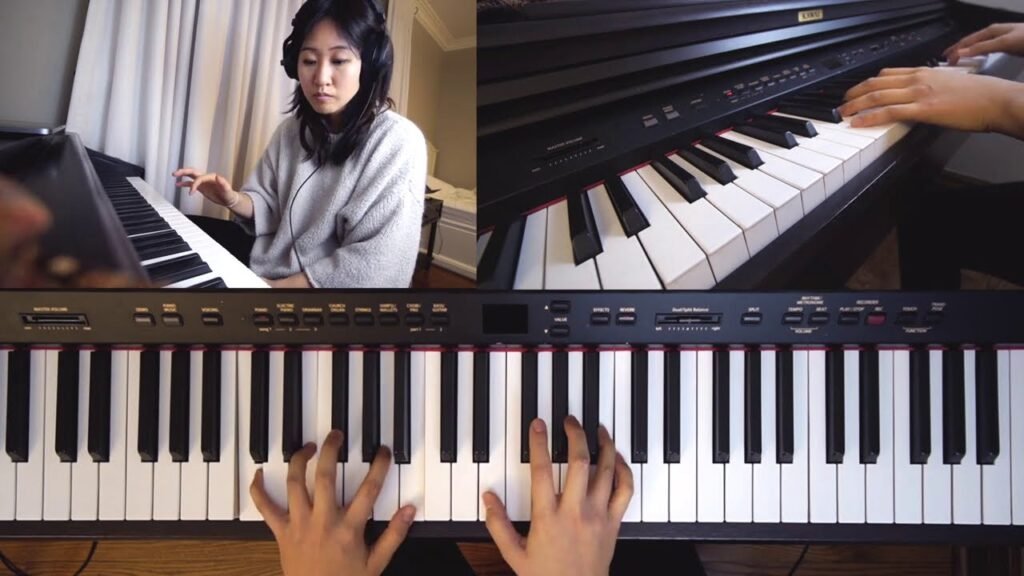
Nahre Sol is one of those rare musicians who bridge the gap between the classical world and the modern creative landscape. A pianist, composer, and digital creator, she’s known for combining intellect, curiosity, and emotion in her music. Among her many compositions, Sideways stands out as one of her most beautiful and challenging piano pieces. It’s thoughtful, expressive, and technically demanding — a perfect example of how she transforms contemporary ideas into something deeply personal and musical.
If you’ve come across her performance of Sideways on YouTube or heard it on her album Alice in Wonderland, you’ll know that the piece has a haunting quality. It moves in unexpected directions — harmonically and rhythmically — as if it’s constantly shifting “sideways” instead of following a straight melodic path. For pianists looking to perform something modern yet lyrical, Sideways is a wonderful piece to explore.
The Sound and Style of Sideways
At first listen, Sideways sounds mysterious. Its harmonies float and drift rather than resolve in predictable ways. The melody feels fragile, almost improvised, while the rhythm creates a sense of motion that never fully settles. Nahre Sol’s music often blends elements of minimalism, jazz harmony, and classical structure, and this piece is no exception.
The title Sideways perfectly captures the sensation of movement that doesn’t go forward but instead explores lateral possibilities — new colors, new shapes, and emotional detours. It’s the kind of composition that invites the pianist to explore space and silence as much as sound.
For listeners, the piece evokes reflection and quiet tension. For performers, it’s a study in balance and restraint. Every note carries emotional weight, and every silence feels intentional.
The Sheet Music and Its Challenges
The Sideways sheet music is written for solo piano and is considered an advanced-level piece. It demands strong technical control, but even more importantly, it requires emotional depth and interpretive skill. The score uses dense chords, layered voicings, shifting meters, and subtle dynamic changes. There are passages where the pianist must maintain independence between the hands while also shaping long phrases that move in contrary directions.
Technically, the piece isn’t just about speed or power. It’s about precision, tone control, and understanding how harmony evolves over time. The real challenge comes from phrasing — making the music breathe and flow naturally while keeping its unpredictable rhythmic character intact.
Because Sideways blends classical and jazz influences, the performer must find a middle ground: not overly rigid in tempo, but not completely free either. It’s like walking on a tightrope between structure and freedom.
Why Pianists Love This Piece
What makes Sideways so beloved among pianists is that it feels personal. It doesn’t rely on traditional virtuosity or flashy showmanship. Instead, it speaks through emotion, color, and subtlety. Many performers describe it as a piece that teaches them to listen — to pay attention to resonance, voicing, and texture.
Nahre Sol herself often talks about her fascination with layering — creating pieces that sound like multiple musical ideas existing at once. Sideways captures that perfectly. When you play it, you feel as if you’re painting in sound, blending tones like shades on a canvas.
The piece also encourages creativity. Even though it’s fully notated, it leaves room for interpretation. Every pianist will shape its pacing and phrasing a little differently, and that’s part of its beauty.
Tips for Learning Sideways
If you’re planning to learn Sideways, start by listening carefully to Nahre Sol’s own performance. Don’t try to mimic it exactly — use it as a reference for color and pacing.
Begin slowly, working through each section hands separately to understand the layering. Notice how certain voices need to stand out while others fade into the background. Pay close attention to pedal markings, since the sustain pedal plays a huge role in shaping the atmosphere.
Break the piece into short phrases instead of full pages. Each phrase often contains its own rhythmic idea or emotional gesture. Isolate those, master their timing, and then connect them.
Finally, focus on the title — “Sideways.” Let that word guide your interpretation. Think about how sideways motion feels: gentle, unexpected, subtle. Bring that idea into your phrasing and dynamic shaping.
The Emotional Story
Though Sideways doesn’t tell a literal story, many listeners feel that it conveys a sense of searching — as if the music is wandering through memory. There’s a bittersweet quality to it, like recalling something beautiful but distant. Some describe it as nostalgic, others as introspective or dreamlike.
Part of Nahre Sol’s genius lies in her ability to make complex music sound intimate. Even though the harmonies can be dense, the emotion remains clear. She writes music that asks both the performer and the listener to think, but also to feel.
Why This Piece Matters Today
In an era when so much music is produced digitally, Sideways stands as a reminder of what human hands and imagination can still do with an acoustic instrument. It bridges tradition and modernity — rooted in centuries of piano music yet unmistakably of our time.
Nahre Sol represents a new generation of composer-performers who don’t fit into a single genre. She’s classically trained but not confined by tradition; she experiments without losing musicality. Sideways embodies that spirit — honest, exploratory, and beautifully unpredictable.
Frequently Asked Questions
Q: What skill level do I need to play Sideways?
A: It’s best suited for advanced pianists or late-intermediate players comfortable with complex rhythms and contemporary harmonies.
Q: How long is the piece?
A: Depending on tempo, performances usually last between four and six minutes.
Q: What makes it unique compared to other piano works?
A: Its blend of classical structure, jazz-influenced harmony, and modern texture makes it stand out. It feels spontaneous yet meticulously crafted.
Q: Is it a good piece for recitals?
A: Absolutely. It’s emotionally engaging, intellectually rich, and unlike standard repertoire pieces. It leaves a lasting impression on listeners.
Q: How can I best interpret it?
A: Focus on tone color, balance between voices, and subtle dynamic shifts. The goal is to express its sideways flow — tension, release, and quiet exploration.
Final Thoughts
Nahre Sol’s Sideways is more than just a piano composition — it’s an experience. It challenges pianists to think differently about sound and invites audiences to listen with curiosity. For anyone seeking music that speaks softly yet profoundly, Sideways is a modern gem worth studying and performing.
