


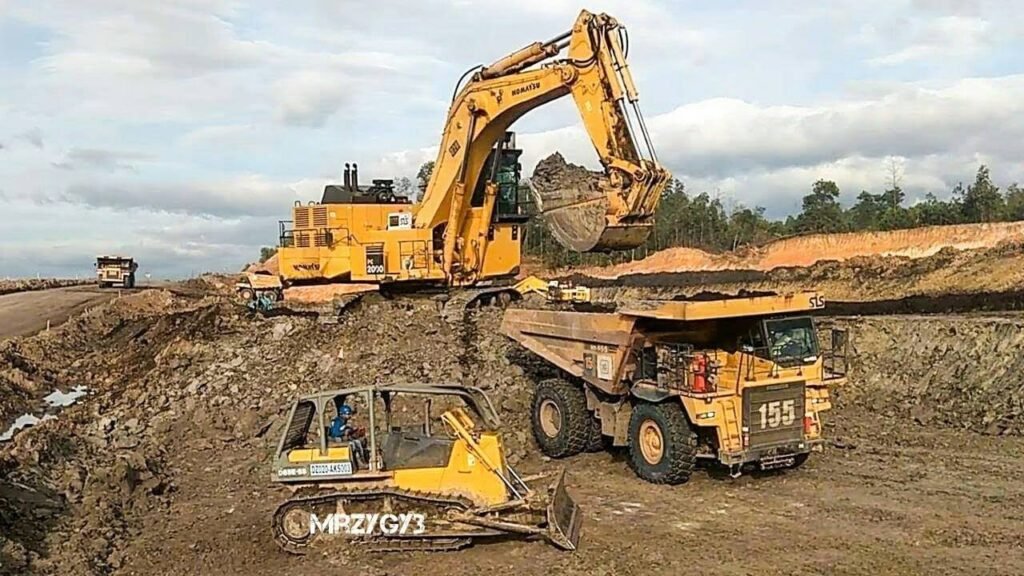
In the world of heavy equipment, efficiency, mobility, and versatility matter more than ever. One innovation that’s been making waves in the construction and excavation industries is the truck-based excavator. Combining the power of a traditional excavator with the mobility of a truck, this hybrid machine is designed to handle modern-day jobsite challenges with ease.
What Is a Truck-Based Excavator?
A truck-based excavator, also known as a truck-mounted excavator, is an excavating machine mounted on a truck chassis rather than a tracked or wheeled undercarriage. This design allows for quick transport between jobsites without the need for a trailer or additional transport equipment.
It features a standard excavator arm (boom, stick, and bucket) for digging, lifting, and moving earth or materials, while benefiting from the highway speed capabilities of a truck.
Key Features
- Mobility
- Unlike traditional excavators that require hauling, truck-based models can drive directly to the jobsite. This reduces downtime and logistics costs.
- Unlike traditional excavators that require hauling, truck-based models can drive directly to the jobsite. This reduces downtime and logistics costs.
- Versatility
- Suitable for urban, rural, and roadside applications, especially where access or time is limited.
- Suitable for urban, rural, and roadside applications, especially where access or time is limited.
- Compact Design
- Many truck-mounted excavators have a compact footprint, making them ideal for city jobs, utility work, and emergency repairs.
- Many truck-mounted excavators have a compact footprint, making them ideal for city jobs, utility work, and emergency repairs.
- On-Road Capability
- These machines are road-legal and can travel at higher speeds than crawler excavators.
- These machines are road-legal and can travel at higher speeds than crawler excavators.
Common Applications
- Utility and Pipeline Work
Fast deployment to sites for digging trenches or repairing lines. - Municipal and Roadside Projects
Ideal for working on narrow streets, drainage systems, and sidewalks. - Disaster Response and Emergency Excavation
Rapid transport allows first responders to deploy digging equipment quickly. - Landscaping and Light Construction
Useful for contractors working on multiple sites in a day.
Pros and Cons
✅ Advantages:
- Faster Jobsite Access: No trailer or flatbed needed.
- Lower Transportation Costs: Drives itself from site to site.
- Urban-Friendly: Operates well in tight or congested areas.
- Multitasking: Some models allow multiple attachments, including breakers, augers, or grapple buckets.
❌ Disadvantages:
- Limited Lifting Power: Typically lighter than large crawler excavators.
- Stability Concerns: Less stable on uneven terrain compared to tracked models.
- Not Ideal for Heavy-Duty Excavation: Better suited for medium-duty tasks.
Popular Models and Manufacturers
While availability varies by region, notable manufacturers include:
- Vacall
- Hi-Rail (for rail-related applications)
- Mecalac
- Hydrema
- Amphitec (for vacuum truck/excavator hybrids)
Each brand offers variations in boom reach, digging depth, truck chassis type, and custom attachments.
Maintenance and Cost
Cost Range:
- New Models: $150,000 to $350,000+
- Used Models: $70,000 to $200,000 depending on age, hours, and condition.
Maintenance Considerations:
- Regular servicing of both the truck engine and the hydraulic/excavation system.
- Tires and suspension should be checked more frequently than tracked machines due to road travel.
- Bucket and arm components need lubrication and inspection just like traditional excavators.
Truck-Based Excavator vs. Traditional Excavator
| Feature | Truck-Based Excavator | Traditional Excavator |
| Mobility | High (road legal) | Low (needs transport) |
| Terrain Capability | Moderate | High (especially tracked) |
| Setup Time | Minimal | High (requires offloading) |
| Cost Efficiency | High for light/medium tasks | Better for heavy-duty work |
FAQs
1. What’s the difference between a truck-based and wheeled excavator?
While both are mobile, a truck-based excavator is mounted on a standard truck chassis and can be driven on highways like any vehicle. Wheeled excavators are purpose-built construction machines that still require transportation to distant jobsites.
2. Can a truck-based excavator be used off-road?
Yes, but it performs best on stable or paved surfaces. It’s not designed for deep mud, loose sand, or rugged terrain like tracked excavators.
3. Are truck-mounted excavators safe to operate in traffic zones?
Yes. Many models are equipped with stabilizers, road lighting, and operator safety features that make them suitable for roadside work and urban construction zones.
4. Do I need a special license to drive one?
Yes. Since it’s built on a truck chassis, operators usually need a commercial driver’s license (CDL) to legally drive it on public roads, depending on local laws.
5. Can I customize the truck chassis?
In many cases, yes. Some manufacturers allow you to choose the truck make (e.g., Volvo, Freightliner, MAN) and then mount the excavator unit to match your preferences and fleet compatibility.
Final Thoughts
The truck-based excavator is an innovative solution for companies seeking mobility, speed, and flexibility. It’s not a replacement for heavy-duty excavators but shines in urban environments, quick-response situations, and light-to-medium digging tasks. If your business needs to move fast and dig efficiently, it might be time to consider going truck-mounted.
