


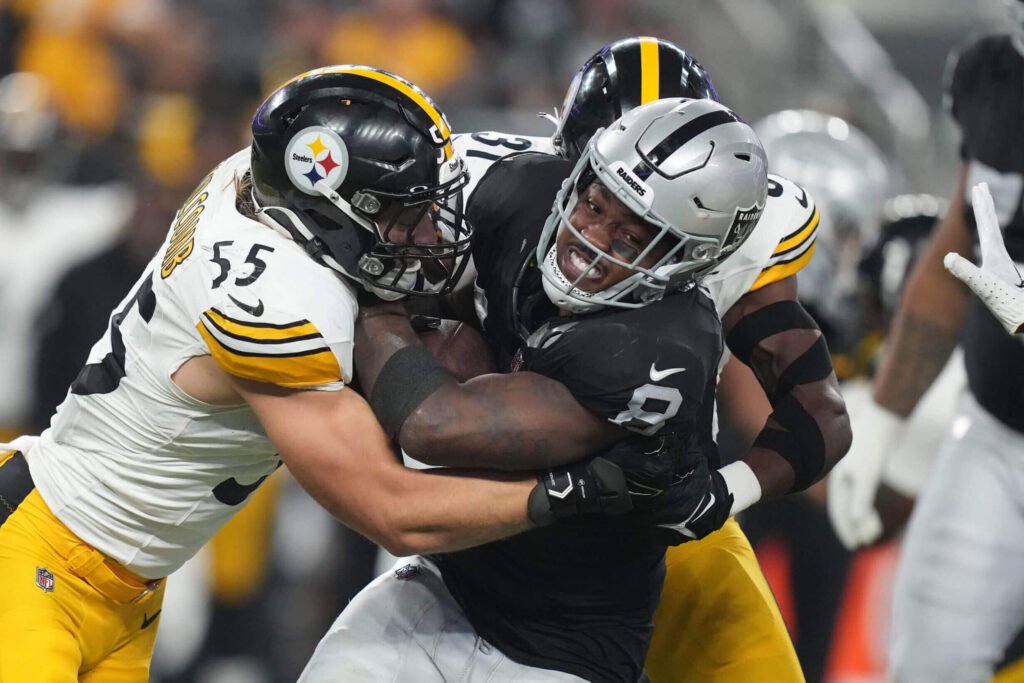
Whenever the Pittsburgh Steelers and the Las Vegas Raiders meet on the field, the matchup carries a special kind of weight. It doesn’t matter if it’s a regular-season clash or a prime-time showcase—these games feel personal, physical, and packed with storylines. While the score tells part of the story, it’s the player stats that reveal how the game truly unfolded. Stats highlight who dominated, who struggled, and where momentum shifted.
This deep-dive explores the typical Steelers vs. Raiders match player stats, the trends that often sway the outcome, and the positions that consistently produce game-changing numbers.
Quarterback Stats: The Deciding Factor in Most Meetings
Quarterback performance is almost always the biggest influencer in this rivalry. For the Steelers, their offensive system historically leans on timing throws, quick reads, and getting the ball out fast. That means completion percentage, third-down efficiency, and yards per attempt become key indicators of how well the Steelers offense is moving.
Raiders quarterbacks, on the other hand, often attack downfield more aggressively. Their numbers frequently show:
- Higher air yards per attempt
- More explosive pass plays
- Bigger statistical swings—either huge gains or costly turnovers
When the Raiders quarterback hits rhythm early, it forces the Steelers defense to adjust—usually by dropping deeper and limiting blitz frequency. But if the Steelers front gets home and starts generating pressure, the Raiders’ vertical attack tends to stall quickly. The QB who protects the football more effectively in this matchup typically ends the night with the win.
Running Back Stats: Ground-and-Pound vs. Burst Plays
The rushing battle between these two teams is almost always a clash of styles. Pittsburgh usually brings a power running game, built around tough inside runs, patience, and wearing down defenders. Their running back stats normally highlight:
- Yards after contact
- Short-yardage conversions
- Steady 3–5 yard gains that set up manageable third downs
The Raiders approach the ground game differently. They rely on burst runs, cutback lanes, and outside-zone designs. Their running backs often produce:
- More explosive plays (10+ yards)
- Higher yards per carry when the blocking is clean
- Dual-threat numbers with receiving targets
In a typical Steelers vs. Raiders meeting, the team that controls time of possession through the run tends to dominate the tempo of the game. If the Steelers’ power game takes over, the Raiders defense spends long stretches on the field. If the Raiders break chunk runs, Pittsburgh is forced to play from behind the sticks.
Wide Receiver and Tight End Stats: Who Wins the Matchups?
This matchup has produced some unforgettable performances from pass catchers on both sides. The Steelers usually spread the ball around, relying on route technicians, yards-after-catch threats, and receivers who can win in traffic. Their stats commonly show:
- Balanced target distribution
- High catch rates on underneath routes
- Crucial third-down receptions
The Raiders often feature a true No. 1 wideout who commands heavy targets. When that player gets rolling, the stats reflect:
- Deep completions
- High yardage totals on limited catches
- Red-zone shots and back-shoulder throws
Tight ends play a major role as well. Pittsburgh uses them as safety valves and possession specialists, while the Raiders often use tight ends to attack seams or exploit mismatches on linebackers. The TE who wins those matchups usually ends up with sneaky-important stats—especially on third down.
Defensive Stats: The Real Battlefield of This Rivalry
Steelers vs. Raiders games are often shaped by defense. Some of the most telling stats come from the battles in the trenches and the coverage matchups in the secondary.
Steelers Defensive Stats That Matter
- Sacks and pressures from their elite edge rushers
- Tackles for loss against the Raiders’ run game
- Pass breakups in intermediate zones
When Pittsburgh’s defense is clicking, they produce steady pressure without needing heavy blitzing. This forces rushed throws, deflections, and turnovers.
Raiders Defensive Stats That Make the Difference
- Interior pressure collapsing the Steelers pocket
- Forced fumbles, often a Raiders trademark in physical games
- Shutdown coverage on outside receivers
Vegas thrives when their front disrupts the Steelers’ rhythm and forces longer third downs. Their defensive stats usually spike when they control line-of-scrimmage leverage.
Special Teams Stats: The Hidden Yardage That Affects Everything
Many Steelers–Raiders battles have been decided by field position. Special teams stats often show:
- Field goal accuracy—especially from long distances
- Net punting average
- Kick return yards that flip momentum
Both teams rely heavily on special teams discipline. A single long return or missed field goal can completely shift the direction of this rivalry.
Overall Statistical Trends in This Rivalry
While every game is unique, certain trends show up again and again in Steelers vs. Raiders matchups:
- Turnover differential almost always predicts the winner.
- Whichever team wins the pass-rush battle usually controls the scoreboard.
- Explosive Raiders plays vs. methodical Steelers drives define the offensive contrast.
- Red-zone execution—the difference between 3 and 7 points—decides close games.
- Running backs who pick up tough yards in the fourth quarter are often the quiet heroes.
Understanding these patterns makes it easier to interpret player stats and see how the game unfolded beneath the surface.
FAQs: Steelers vs Las Vegas Raiders Match Player Stats
1. Where can I find official player stats after the game?
You can find complete stats on the NFL’s website, team homepages, and major sports news platforms immediately after the final whistle.
2. What stats matter most in this rivalry?
Quarterback efficiency, rushing production, pass-rush impact, and turnovers are the most important categories.
3. Why do these teams produce such physical defensive stats?
Both franchises have long traditions of aggressive, hard-hitting defensive football, so sacks, pressures, and big tackles are common.
4. Do wide receivers usually have big games?
It depends on matchups. Some games turn into defensive battles, while others feature explosive passing performances on both sides.
5. How much do special teams influence the stats?
A lot. Field position and accuracy from kickers often swing close Steelers vs. Raiders games.
