


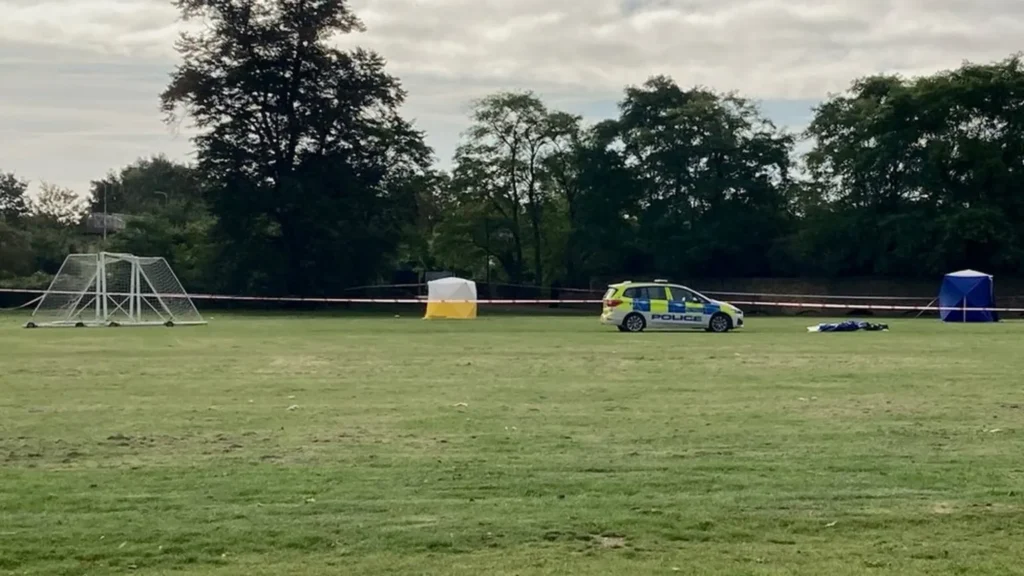
Nestled along the picturesque banks of the River Stour, Iford Playing Fields has long served as a cherished green space for the local community. Families stroll along its paths, sports enthusiasts enjoy the open fields, and nature lovers find a peaceful retreat beside the river. However, this serene setting was recently disrupted by a significant riverbank collapse raising concerns about safety, environmental impact, and the stability of local recreational areas.
The collapse occurred in late May 2025 along a stretch of the riverbank near the train bridge opposite Bailey Bridge Marina. Residents noticed part of the bank had slumped dramatically into the river, with large trees uprooted and sections of the footpath rendered unsafe. The incident was sudden but not entirely unexpected, as the area had shown subtle signs of erosion over time. This event highlights how natural processes, combined with environmental and human factors, can converge to create potentially hazardous situations.
Understanding the Causes
Riverbank collapses are rarely the result of a single factor. In the case of Iford Playing Fields, several elements appear to have contributed:
- Erosion at the river’s base: The flowing water of the River Stour naturally erodes the lower parts of the bank. On bends where the current is stronger, the undercutting effect is more pronounced, gradually weakening the bank until sections collapse.
- Soil saturation: Prior to the collapse, the region experienced extended periods of heavy rainfall. Saturated soil loses much of its stability, making the riverbank more prone to sliding or slumping.
- Vegetation and root system failure: Trees and shrubs typically act as natural stabilizers. However, when large trees topple or their root systems weaken, they can unintentionally pull soil into the river, accelerating collapse.
- Human and infrastructure impacts: The footpaths near the river and soil compaction from regular use can exacerbate erosion. Additionally, nearby bridges and drainage patterns may have altered water flow, adding stress to the bank.
- Weather extremes: Strong winds and fluctuating water levels increase the likelihood of collapse, particularly after periods of heavy rain, which was reported in the area before the event.
Immediate Risks and Consequences
The riverbank collapse has posed several immediate challenges for both residents and local authorities:
- Safety hazards: The area directly affected by the collapse is now unstable. Walking near the river’s edge or along adjacent paths presents a high risk of injury.
- Loss of recreational space: Portions of the playing fields and paths may remain closed for months. This affects local sports teams, school activities, and community events that rely on this green space.
- Environmental impact: When the bank collapsed, it deposited large amounts of soil and tree debris into the River Stour. This can affect water quality, aquatic habitats, and fish populations, particularly in sensitive areas.
- Risk to infrastructure: The proximity of the collapse to a train bridge raises concerns about the long-term stability of nearby structures, necessitating careful monitoring and intervention.
Response Measures
The Bournemouth, Christchurch, and Poole Council (BCP Council) has taken immediate steps to address the collapse. These include cordoning off the unstable areas, placing warning signs, and conducting thorough surveys to assess the full extent of the damage. Geotechnical experts are evaluating the site to determine appropriate stabilization methods.
Potential solutions include both soft and hard engineering techniques. Soft measures may involve regrading slopes, planting deep-rooted vegetation such as willow to naturally hold the soil, and using biodegradable erosion-control mats. Hard engineering solutions might include rip-rap (rock) reinforcement, gabion walls, or other structural supports if necessary. Additionally, relocating footpaths slightly inland can prevent future accidents while preserving recreational access.
Why This Matters
While riverbank erosion is a natural phenomenon, the collapse at Iford Playing Fields underscores several important considerations for communities and local authorities:
- Vulnerability of public spaces: Parks and recreational areas adjacent to rivers are particularly at risk during periods of heavy rainfall or extreme weather.
- Impact of climate change: More frequent storms, heavy rainfall, and fluctuating river levels make such collapses more likely in the future.
- Community awareness: Early signs of erosion—such as cracks in the soil, leaning trees, or bulging banks—should be monitored and reported by local residents to prevent accidents.
- Cost of repair versus prevention: Once a bank collapses, restoration is significantly more expensive and complex than preventative measures like vegetation management and slope monitoring.
Looking Ahead
Restoration of the collapsed bank will likely take several months. Continuous monitoring will be critical to ensure the stability of the area and the safety of visitors. Community involvement can also play a key role: residents can participate in planting initiatives, report early warning signs, and help maintain pathways to reduce future risks.
The long-term goal is not merely to repair the damage but to create a safer, more resilient riverside space. By combining engineering solutions with ecological restoration, the area can become both more stable and more environmentally friendly, providing a sustainable recreational space for generations to come.
FAQs: Riverbank Collapse at Iford Playing Fields
Q1. Where did the collapse occur?
The riverbank collapse happened along the River Stour at Iford Playing Fields, near the train bridge opposite Bailey Bridge Marina.
Q2. When did it happen?
Reports indicate that the collapse occurred in late May 2025, following a period of heavy rainfall and strong winds.
Q3. What caused the collapse?
The collapse was caused by a combination of erosion, saturated soils, vegetation loss, human activity, and extreme weather conditions.
Q4. Is the area safe now?
Currently, parts of the affected area are restricted due to instability. Residents should follow posted signs and avoid the river’s edge.
Q5. Who is responsible for repairs?
The Bournemouth, Christchurch, and Poole Council is overseeing repairs, with input from environmental agencies and geotechnical experts.
Q6. Could it happen again?
Yes. Riverbank collapses are a natural risk along active waterways. Preventative measures can reduce but not completely eliminate this risk.
Q7. How long will it take to fix?
Repairs and full stabilization could take several months, depending on surveys, construction methods, and weather conditions.
Q8. What environmental effects has it had?
The collapse introduced soil and tree debris into the river, affecting water quality, aquatic habitats, and potentially local wildlife.
