


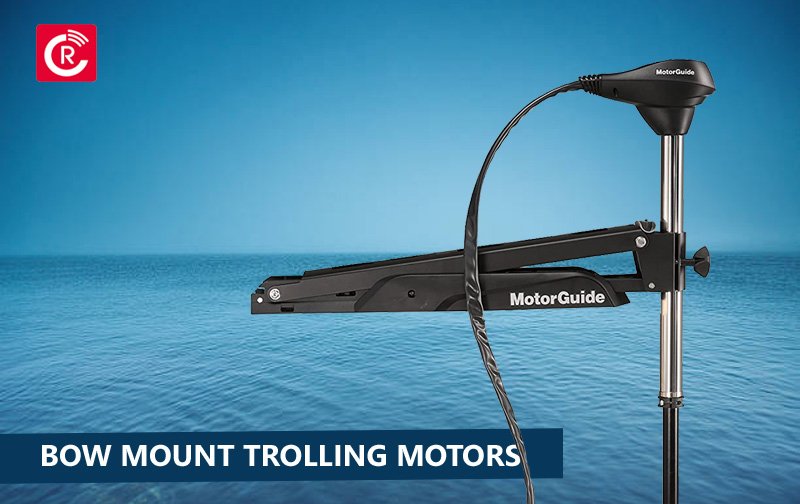
If you’re serious about boat control, fishing precision, or just making your time on the water smoother, mounting a trolling motor on the bow is one of the best upgrades you can make. Bow-mounted motors let you pull the boat instead of pushing it, which gives you sharper steering and better maneuverability—especially in wind or current.
This guide walks you through what to know before, during, and after installation, plus answers to the most common questions.
Why Choose a Bow Mount?
- Control: Pulling from the front gives immediate directional changes.
- Fishing advantage: Keeps you facing your target instead of drifting sideways.
- Tech features: Most advanced trolling motors (GPS anchoring, spot lock, autopilot) are designed for bow mounting.
The tradeoff? Installation is more involved than a transom mount, and you’ll need deck space up front.
What You’ll Need
Before you start, gather these essentials:
- Trolling motor with a bow mount bracket
- Mounting template (usually included with the motor)
- Drill and drill bits
- Bolts, washers, and locknuts (stainless steel recommended)
- Backing plate or marine-grade plywood (for reinforcement if the deck is thin)
- Marine sealant (to prevent water intrusion)
- Wrenches or socket set
Optional but recommended: a quick-release bracket, which makes removing the motor easy for storage or transport.
Step-by-Step Installation
- Choose the Location
- The motor shaft should extend past the bow’s edge when stowed to ensure the prop clears the hull.
- Check that it won’t block hatches or interfere with casting space.
- Align the Motor
- Position the mounting base so the motor deploys straight down without hitting the boat.
- Mark the hole locations using the template or base plate.
- Drill the Holes
- Drill carefully through the deck at the marked spots.
- If your deck is thin, prepare a backing plate underneath to spread the load.
- Apply Sealant
- Coat the holes and bolts with marine-grade sealant to prevent leaks.
- Secure the Motor
- Bolt the mount in place with washers and locknuts.
- Double-check for stability—no wobble should remain.
- Wire the Motor
- Connect to the battery (12V, 24V, or 36V depending on your motor).
- Use marine-grade wiring and circuit breakers for safety.
- Test Deployment
- Deploy and stow the motor to confirm clearance.
- Run it at low speed to make sure it tracks straight.
Pro Tips
- If you fish in saltwater, rinse the motor with fresh water after every trip.
- Choose a shaft length that extends at least 12 inches below the waterline to avoid cavitation.
- Consider adding a recessed foot pedal tray for comfort if your motor uses foot control.
- Label wiring and use heat-shrink connectors to prevent corrosion.
FAQs
1. Can I mount a trolling motor on any bow?
Most fishing boats, jon boats, and bass boats allow bow mounts, but you need flat deck space. Small inflatables or kayaks usually require special mounts.
2. Do I need a backing plate?
If your bow deck is thin fiberglass or aluminum, yes. A backing plate distributes stress and prevents cracks. On thick composite decks, it’s usually optional.
3. How do I know what shaft length I need?
Measure from the deck surface to the waterline. Add about 20 inches for calm water or 25 inches for rough conditions. Too short, and the prop may cavitate; too long, and it drags when stowed.
4. Can I install it myself or should I hire a pro?
If you’re comfortable with drills and wiring, it’s a manageable DIY project. If not, a marine shop can handle it quickly. Mistakes like poor wiring or weak mounting can cause bigger problems later.
5. Will a bow mount drain my battery faster than a transom mount?
Not necessarily. Battery life depends on motor thrust, voltage, and how hard you run it. But bow mounts often feel more efficient because they hold course better in wind.
6. What’s the benefit of a quick-release bracket?
It saves time if you need to remove the motor for storage, trailering, or switching between multiple boats. It also protects the motor from theft.
7. Can I mount it off-center?
Slightly off-center is fine if you need clearance for hatches, but keep it as close to the centerline as possible for straight tracking.
8. Do I need special tools?
Just standard drills, wrenches, and sealant. Marine-specific tools aren’t required unless you’re running heavy-gauge wiring for high-voltage motors.
Final Thoughts
Mounting a trolling motor on the bow transforms how your boat handles. It gives you the kind of control and precision that serious anglers rely on, especially when fishing in wind or current. With careful planning, the right shaft length, and a solid installation, you’ll have a setup that’s reliable, efficient, and built to last.
