


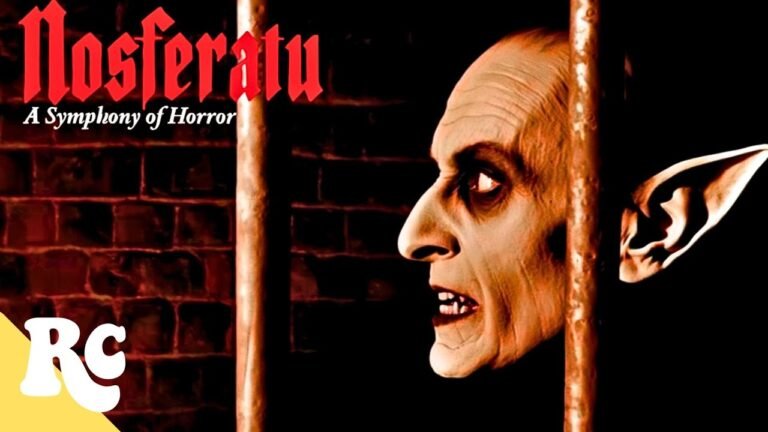
When people think of vampires today, they often imagine charming immortals with tragic love stories. But long before vampires became romantic or glamorous, there was Nosferatu—a creature of pure dread. Released in 1922, Nosferatu: A Symphony of Horror remains one of the most unsettling vampire stories ever put on screen. Even after more than a century, its influence can still be felt across horror films, literature, and pop culture.
The Birth of Nosferatu
Nosferatu was directed by F.W. Murnau, a pioneer of German Expressionist cinema. The film was heavily inspired by Bram Stoker’s Dracula, though it was made without permission. To avoid legal trouble, character names and locations were changed. Dracula became Count Orlok, Jonathan Harker became Thomas Hutter, and London turned into the fictional town of Wisborg.
Despite these changes, the similarities were obvious. Bram Stoker’s widow sued the filmmakers, won the case, and demanded all copies of Nosferatu be destroyed. Luckily, several prints survived, allowing the film to escape erasure and become one of the most important works in horror history.
Count Orlok: A Vampire Like No Other
What truly sets Nosferatu apart is its vampire. Count Orlok is not seductive or elegant. He is tall, stiff, pale, and deeply unsettling. With his bald head, pointed ears, sharp teeth, and long claw-like fingers, Orlok looks more like a corpse than a man.
This portrayal redefined vampires as creatures of fear rather than desire. Orlok moves unnaturally, often appearing more like a shadow than a living being. One of the film’s most iconic moments shows his silhouette slowly rising from a coffin—a simple image that remains terrifying even today.
Atmosphere Over Action
Nosferatu proves that horror doesn’t need loud sound effects or graphic violence. Being a silent film, it relies entirely on visual storytelling. Long shadows stretch across walls, empty streets feel haunted, and silence becomes a weapon. The slow pacing allows dread to build gradually, making the viewer feel trapped in Orlok’s world.
German Expressionism plays a major role in this effect. The exaggerated architecture, unnatural lighting, and eerie framing reflect emotional states rather than realism. Fear is not just shown—it’s felt.
Symbolism and Deeper Meaning
Many interpretations surround Nosferatu. One of the most common views sees Count Orlok as a symbol of plague and death. The vampire arrives with rats, sickness, and mass fear, mirroring the real-life epidemics that haunted Europe in the early 20th century.
Others see Nosferatu as a reflection of post–World War I anxiety. Germany was dealing with trauma, loss, and social instability, and the film captures that sense of decay and hopelessness. Orlok is not just a monster—he is an unstoppable force bringing ruin wherever he goes.
The Ending That Changed Vampire Lore
Unlike many later vampire stories, Nosferatu gives power to sacrifice rather than strength. The vampire is defeated not by violence, but by selfless love. Ellen, the heroine, knowingly distracts Orlok until sunrise, causing him to perish in the daylight.
This ending introduced sunlight as a fatal weakness for vampires, a concept that later became a defining rule of vampire mythology. Today, it’s almost impossible to imagine vampires without this trait—and it all traces back to Nosferatu.
Influence on Horror and Cinema
Nosferatu shaped horror in ways that are still visible today. From the eerie pacing of modern arthouse horror to the visual language of shadows and silence, the film’s DNA is everywhere. Directors such as Alfred Hitchcock, Werner Herzog, and even modern filmmakers cite it as a major influence.
Herzog’s 1979 remake paid tribute to the original while adding emotional depth and modern filmmaking techniques. Rather than replacing the original, it reinforced Nosferatu’s lasting power.
Why Nosferatu Still Matters
In an age of CGI and fast-paced horror, Nosferatu stands as proof that fear doesn’t age. Its images linger in the mind long after the screen fades to black. The film reminds us that true horror comes from atmosphere, suggestion, and the unknown—not excess.
Nosferatu isn’t just an old movie. It’s a foundation. Without it, vampire stories—and horror itself—would look very different.
FAQs About Nosferatu
What is Nosferatu about?
Nosferatu tells the story of Count Orlok, a vampire who spreads death and disease after becoming obsessed with a young woman.
Is Nosferatu the same as Dracula?
Nosferatu is an unofficial adaptation of Dracula, with altered names and details due to copyright issues.
Why is Nosferatu considered important?
It helped define the horror genre, introduced key vampire traits, and influenced generations of filmmakers.
Is Nosferatu still worth watching today?
Yes. Its atmosphere, visuals, and historical importance make it essential viewing for horror fans.
Are there modern versions of Nosferatu?
Yes. The most famous remake is Werner Herzog’s 1979 adaptation, with more versions planned.
