


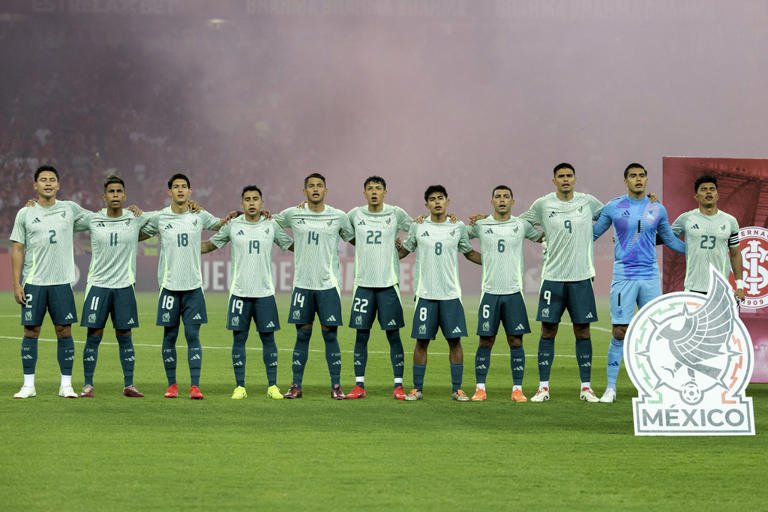
The clash between the Mexico national football team vs Japan national football team lineups is one of those international matchups that consistently delivers intrigue. Both nations represent strong footballing cultures from different continents, and when they meet, the game often becomes a fascinating tactical battle rather than a simple contest of talent. Fans closely analyze the starting lineups because each manager’s selection reveals their approach to tempo, pressing, and game control.
This article provides a full human-written breakdown of the expected lineups, tactical approaches, key player roles, and what fans should watch for when Mexico and Japan face off.
Expected Mexico National Football Team Lineup
Mexico typically approaches games with confidence on the ball and an emphasis on attacking width. Their preferred systems are the 4-3-3 and 4-2-3-1, depending on opposition strength and match context.
Likely Formation: 4-3-3
- Goalkeeper: Mexico usually relies on a keeper comfortable with the ball at his feet, supporting build-up from the back.
- Defense:
- Right Back: Often pushes high to support attacks and provide crosses
- Center Backs (2): One focuses on distribution, the other on physical duels
- Left Back: More balanced, cautious when defending transitions
- Midfield:
- Defensive Midfielder: Screens the back line and recycles possession
- Central Midfielders (2): One box-to-box runner and one creative organizer
- Attack:
- Wingers: Fast, technical players who like cutting inside
- Striker: Mobile forward who presses defenders and creates space
Mexico’s Tactical Identity
Mexico aims to dominate possession, stretch the pitch wide, and break defensive lines through quick passing combinations. Their midfield triangle is essential for controlling tempo and preventing counterattacks.
Expected Japan National Football Team Lineup
Japan is known for tactical discipline, intelligent movement, and relentless work rate. Against technically gifted teams like Mexico, Japan often adopts a compact structure that allows quick transitions.
Likely Formation: 4-2-3-1
- Goalkeeper: Quick reflexes and strong communication are key strengths
- Defense:
- Fullbacks: Energetic and positionally aware
- Center Backs: Organized, calm under pressure
- Midfield:
- Defensive Midfielders (2): Double pivot offering protection and ball circulation
- Attacking Midfielders (3): Central playmaker with wide attackers cutting inside
- Striker:
- Lone Forward: Presses aggressively and exploits space behind defenders
Japan’s Tactical Identity
Japan relies on sharp passing, coordinated pressing, and disciplined defensive positioning. Rather than controlling possession for long periods, they focus on efficiency and quick decision-making.
Key Tactical Battles to Watch
1. Wing Play vs Defensive Structure
Mexico’s wingers will attempt to isolate Japan’s fullbacks, using pace and dribbling to create scoring chances. Japan’s defensive organization must remain compact to avoid being stretched wide.
2. Midfield Control
The central battle is crucial. Mexico’s three-man midfield looks to dominate possession, while Japan’s double pivot focuses on disrupting rhythm and launching counterattacks.
3. Pressing and Build-Up Play
Japan’s pressing system tests Mexico’s composure when playing out from the back. If Mexico handles the pressure well, they can create numerical advantages in midfield.
How Substitutions Can Influence the Lineups
As the match progresses, lineup changes can significantly shift momentum:
- Mexico may introduce an extra attacker if chasing a goal, switching to a more aggressive shape.
- Japan could strengthen midfield or defense if protecting a lead, emphasizing compactness and discipline.
Late substitutions often bring pace and fresh energy, especially in wide areas, which can be decisive in tight matches.
Strengths and Weaknesses of Both Lineups
Mexico Strengths
- Technical ability across all positions
- Strong attacking width
- Comfortable in possession
Mexico Weaknesses
- Can be vulnerable to fast counterattacks
- High defensive line under pressure
Japan Strengths
- Tactical discipline and organization
- Effective pressing
- Quick transitions
Japan Weaknesses
- Less physical presence in aerial duels
- Can struggle against sustained pressure
Why Fans Love This Matchup
The Mexico national football team vs Japan national football team lineups represent two different footballing philosophies. Mexico brings flair, creativity, and emotion, while Japan delivers structure, efficiency, and teamwork. Neither approach is superior on its own, which makes the encounter unpredictable and exciting.
Matches between these sides often hinge on small details: a moment of individual brilliance, a pressing mistake, or a perfectly timed substitution.
FAQs
1. What formation does Mexico usually use against Japan?
Mexico most often uses a 4-3-3, but may shift to a 4-2-3-1 depending on tactical needs.
2. What is Japan’s preferred formation?
Japan typically lines up in a 4-2-3-1, focusing on defensive stability and fast transitions.
3. Are these confirmed lineups?
No, these are expected lineups. Final selections depend on fitness, tactics, and managerial decisions.
4. Which team has the advantage in midfield?
Mexico has creativity and physicality, while Japan offers structure and pressing. The advantage depends on match tempo.
5. What usually decides matches between Mexico and Japan?
Midfield control, defensive discipline, and efficiency in front of goal are often decisive factors.
Final Thoughts
The Mexico national football team vs Japan national football team lineups promise a high-quality international contest built on tactics, discipline, and technical skill. Whether Mexico controls possession or Japan strikes through quick transitions, lineup decisions will heavily influence the outcome. For fans of intelligent, fast-paced football, this is a matchup worth watching closely.
