


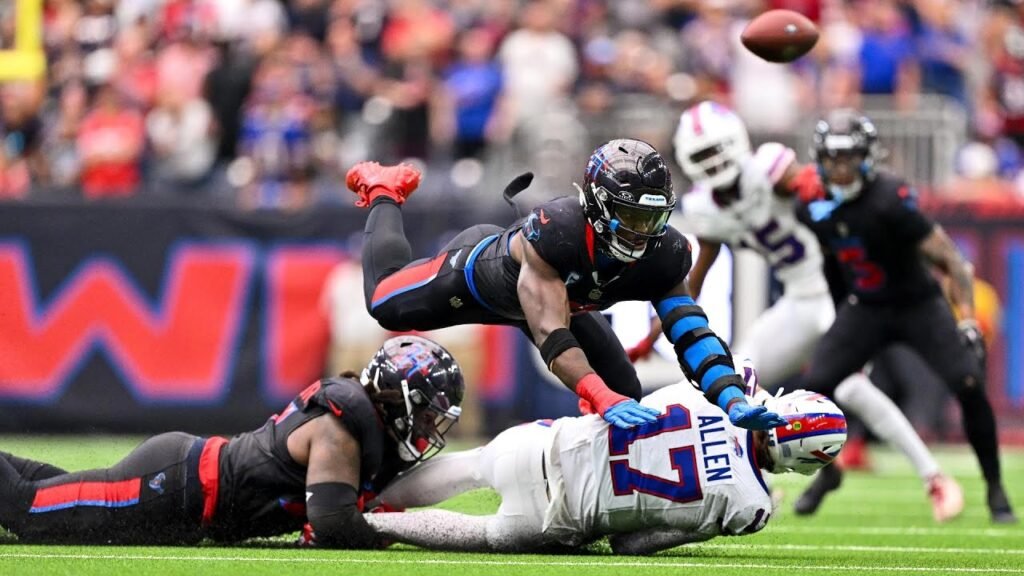
When the Buffalo Bills and Houston Texans meet on the field, the matchup tends to produce a mixture of explosive plays, physical defense, and individual performances that keep analysts talking long after the final whistle. Although the two franchises are built in very different ways, their clashes often come down to which team maximizes its playmakers and who handles pressure moments with more composure. In this breakdown, we take a close, human look at Buffalo Bills vs Houston Texans match player stats, how those numbers typically develop over four quarters, and what they reveal about the style and identity of each team.
Quarterback Comparison: Efficiency vs. Versatility
Quarterbacks almost always decide this matchup, and the contrast between the two styles is part of what makes the game interesting.
The Bills’ quarterback is known for his rare combination of arm talent and mobility. In most Bills–Texans games, his stat line tends to reflect that dual-threat nature—something in the neighborhood of 250 to 300 passing yards, two or three touchdowns, and 40 to 60 rushing yards isn’t unusual. More importantly, he often creates plays when nothing seems available, extending drives by scrambling or firing accurate passes on the move. Completion percentages usually sit in the mid-60s, but the real story lies in the high number of explosive plays he generates.
Meanwhile, the Texans’ quarterback tends to approach the game differently. Instead of relying on improvisation, he often wins through timing, accuracy, and reading coverages. Typical stat lines include 230 to 300 passing yards, one or two touchdowns, and a high completion rate that can easily exceed 68% when the offense is in rhythm. Even when he doesn’t put up huge numbers, the Texans’ passing attack thrives on efficiency—quick throws, smart decisions, and avoiding negative plays.
The biggest statistical contrast between the two quarterbacks usually shows up on the ground. Buffalo’s signal-caller frequently adds meaningful rushing totals, while Houston’s quarterback often stays in the pocket and commands the game with sharp decision-making instead.
Wide Receivers and Tight Ends: Big Moments on Both Sides
Both the Bills and Texans rely heavily on their receiving corps, though their usage differs.
For the Bills, the top receiver usually posts standout numbers—something in the range of 6 to 10 receptions and 80 to 120 yards. Deep routes, sideline fingertip catches, and red-zone targets make Buffalo’s receiving weapons central to their offensive identity. Tight ends also play a bigger role in this matchup than casual fans might expect, often adding 40 to 60 yards and a handful of chain-moving plays.
Houston’s receivers, however, often shine in a different way. Their skill is in yards after catch, using speed and suddenness on crossing routes and quick slants. Typical stats for the Texans’ main receiver include 70 to 110 yards on 5 to 9 catches, while secondary targets frequently contribute in short bursts that keep drives alive. Houston quarterbacks tend to spread the ball around more evenly, which usually shows up in the stat sheet.
Running Back Impact: Subtle but Essential
Neither team is known for being run-first, but rushing stats still matter.
For the Bills, running backs often finish with 60 to 90 rushing yards, plus another 20 to 40 yards receiving. The most important contributions come in the red zone and in short-yardage situations. When the Bills run effectively, they control tempo and keep defenses from keying too heavily on their quarterback.
The Texans’ backfield tends to produce slightly more balance, often recording 50 to 80 rushing yards and another 15 to 30 yards through the air. While they may not generate highlight-reel moments every game, their consistency helps set up play-action opportunities that the Texans’ passing game thrives on.
Defensive Performances: Pressure and Turnovers Tell the Story
Defense frequently determines the tone of a Bills–Texans matchup.
Buffalo Bills Defense
Buffalo’s defense is built on disguised coverages, pressure packages, and disciplined tackling. In most matchups, Bills defenders produce:
- 2 to 4 sacks, usually coming from edge rushers
- 8 to 12 tackles for the most active linebacker
- 1 or 2 pass breakups from their top corner
- Occasional turnovers generated by tight zone coverage
Their ability to limit big plays often decides how the Texans’ offense flows.
Houston Texans Defense
The Texans rely heavily on physicality and emerging young talent. Their defensive stat lines commonly feature:
- 2 to 3 sacks, particularly from interior pressure
- High tackle totals (9 to 13) from their linebackers
- 1 to 3 deflections from aggressive corners
- A handful of QB hits that influence the Bills’ timing
When the Texans hold their own defensively, they typically disrupt Buffalo’s rhythm early.
Key Statistical Themes That Shape the Game
1. Turnover Margin
Interceptions or fumbles often come in momentum-swinging moments. The team that protects the ball usually wins.
2. Explosive Plays
Buffalo tends to generate explosive gains through deep shots or quarterback scrambles, while Houston creates them through precision passing and YAC ability.
3. Red Zone Efficiency
Neither team can afford to settle for field goals in this matchup. Stats inside the 20 often determine the winner.
4. Pressure Rates
Sacks and QB hits usually reveal which team controlled the trenches.
Final Thoughts
The Buffalo Bills vs Houston Texans match player stats tell a story of contrasting styles—Buffalo’s big-play, high-variability offense against Houston’s efficient, rhythm-based attack. Both teams bring unique strengths, and the numbers they produce on game day tend to reflect which identity takes control first. Whether you’re studying fantasy matchups or simply love the chess match of football, these stat patterns offer a clear window into how this AFC battle typically unfolds.
